Rhiannon Adam: Almost to the moon
Rhiannon Adam: Almost to the moon
Rhiannon Adam has lived on a deserted island, shared a tent with frackers, and almost traveled to the moon. The immersive documentary photographer has created several works across a wide range of topics and stories. Featuring complex narratives relating to outsider communities and (the abuse of) power. Here, she tells the story of how she starts new projects, how she takes her time getting to know the ones around her, and how she reflects on her own positionality as a photographer.
You are a documentary photographer. How would you describe your way of working?
‘I feel like we are in this movement where it is believed that if you want to tell a story, you should ask the person closest to the story to document it. I’m interested in doing the exact opposite. I often choose subjects I have no direct connection to, which means I have to build that relationship from the ground up and invest time in it.
I don’t believe in the objectivity of the researcher while documenting. Keeping distance might seem professional, but it leads to shallow storytelling, in my opinion. To tell a meaningful story, I believe that you have to immerse yourself. You need to take the time to understand how people think and why. That means showing up and participating in their daily lives.
Right now, I’m working on a new project in South Africa, about Orania, a deeply religious white Afrikaner separatist town. When I’m invited to church, I go. Even though I’m not a churchgoer, I dress appropriately, attend the service, and stay for the family lunch afterward. Those moments create trust and open up conversations, which lead me to certain pictures. If I hadn't done that, and done the thing that felt a bit uncomfortable, at least five pictures wouldn’t have been made.’
You truly immerse yourself in the community you are documenting. As you already tapped into your latest work in South Africa, how do you approach such a community and start the first conversation?
‘I always start with simply being there. I go to drink a coffee in a local coffee shop, and just sit there for a while. After some time, because you are an outsider, people start to notice you. Especially in this project, with my unusual hairstyle, I really stood out in the conservative Christian community.
My approach is to be extra nice. I try to make it impossible for people not to like me. Usually, it starts with small talk, I ask questions, stay curious about everything, and always say yes. If someone invites you for something, even if they turn out to be the most boring person on earth, I say yes. In my experience, you just have to play the long game, and eventually the world opens up to you.
When I’m working on a project, it is my whole life during that time. Because for me, to truly immerse myself, I can’t keep one foot in and one foot out. I have to be fully present; only then can I really see what I’m looking at and understand where I am.’
In this project, but also in others, you don’t always share the values of the people involved. How do you approach telling stories that reflect ideals you don’t agree with?
‘For every project that I do, I have to break down my own biases. I can’t enter a conservative catholic community with my own left-leaning values and pose that upon them. I strive to stay open, even when it’s difficult. That means sometimes swallowing a part of myself, acknowledging that we each have our differences, and understanding that I won’t and will never change someone else’s beliefs. I can only try to see where they’re coming from.
I also believe it’s our responsibility, especially in 2026, to seek ways to understand people whose ideologies differ from our own. We all share this world, and we need to find ways to coexist. In my work, I try to act as a bridge. Showing that there are many shades of gray, and I’m interested in exploring those shades.’
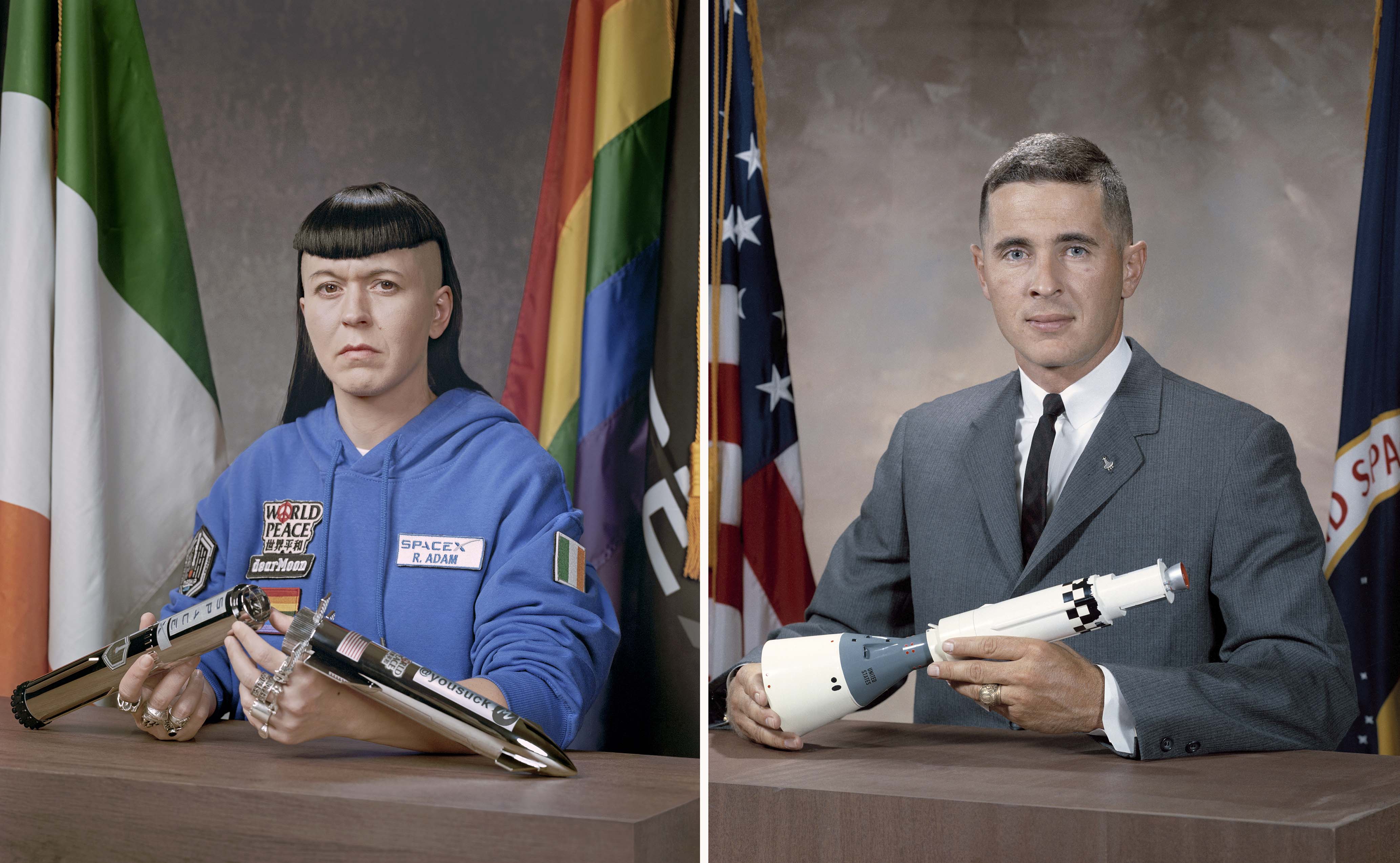
Let’s turn to Rhi-Entry, a project that is very personal to you. It began with an open call for a lunar art residency, an opportunity to send artists, rather than astronauts, to the moon to capture what it means to be in space. After being selected, you spent years preparing through research and medical testing, only for the mission to be abruptly cancelled. Rhi-Entry ultimately became the story of a journey that never took place. What did it mean to you, at the beginning, to be chosen for this opportunity?
‘This project began as a dream, one that once felt almost impossible. The idea that someone like me could go to the moon seemed far beyond reach. But as I began researching and preparing for the mission, my perspective shifted. I realized how deeply we mythologize space, as if it exists somewhere beyond us, separate and distant. In reality, we are already in space, it is not above us, we are in it.
And yet, access to space remains exclusive. Those who get to go be are carefully selected and trained as an astronaut (and by extension, be approved by their country’s government and the image it wants to portray), or be exceptionally wealthy and able to buy their own trip. For most people, it is a world they cannot relate to or see themselves in.
As I moved deeper into the preparation process, I became aware that I was stepping into a system that constantly pushes you to conform to a certain hero narrative. There are unspoken rules about how you should behave, what you should represent, and how you should present yourself.
I resisted that pull. I didn’t want to hide parts of who I am or reshape myself to match the traditional image of the American space hero. I wanted to be messy, flawed, and vulnerable. Someone that we had never seen before, a real human with texture and character. By being open about who I am, including my identity as an out queer woman, I knowingly took a risk. But it felt necessary. I wanted to create a different kind of representation, one that unsettles the myth, and reimagines space as something more human, more honest, and ultimately, more inclusive. Space is all of ours and whether we like it or not, what happens out there happens here.’
What motivated you to keep documenting, even after the project was cancelled?
‘I found myself in a rare position, without being contractually obligated to silence. I wanted to take the responsibility to speak openly for everyone else who couldn’t. I wanted to tell the full story of what happened, how we were treated, how it all came to an end, and what it meant for the people involved.
At its core, it revealed something much bigger. It showed how easily someone with wealth and power can make decisions that drastically affect other people’s lives, without facing any real consequences. For them, it’s was another opportunity, another project. But for us, it was life-changing. People reshaped their futures around it, postponing marriage and having children, reshaping major life decisions. And yet, all of that could be taken away in an instant. It reflects a wider reality, how much power we place in the hands of people who are often far removed from the impact of their choices.’


You present images of yourself receiving the news that you were selected for the program, as well as the moment you found out it wasn’t going to happen. The work shows a lot of emotion, what was it like to show yourself in that way?
‘It was a vulnerable process, but that was exactly what made it feel real. From the beginning, I knew that if I wanted to tell this story honestly, therefore I had to place myself at its center. I could have told it through others, but in the end, using my own experience felt more truthful.
By allowing that vulnerability to be visible, I also wanted to challenge the idea of who gets to belong in space. It shows that someone who shows her emotions and feelings freely can be selected to go to space in the first place. As much as it was like a broken dream, I got closer than most.’
Let's jump back to photography in general. Why do you think you are telling your stories with the medium of photography?
‘Photography is a very accessible medium, which is exactly what I like about it. When you say you’re a photographer, people don’t see it as overly academic or exclusive. They understand it, because they themselves have a camera in their pockets.
It also suits me because I like to collect things during the journey of making a project. Photography allows me to preserve and present everything collected. It gives me a way to show where things come from, rather than just the final result.
On top of that, I can share it easily. I use it very often as a gift to the ones I’m documenting, which I find very important and meaningful.’
You have very different styles, where you go from polaroid to blueprint. How do different formats of photography help you tell the story?
‘I’m interested in photography as a physical object, something that exists in the world, takes up space, and has its own presence. In its original form, photography is a chemical process, and that process has the power to reveal things that might otherwise remain hidden.
I’m always thinking carefully about what the most appropriate way is to document a particular moment. Blueprint for Living, for example, is a project that presents the history of the queer community whose lives have been forced into secrecy. I used cyanotype chemistry, which contains traces of cyanide, to make the images. This is a chemical that we used to exterminate targeted groups - including queer people - during the Holocaust. By using this same material, I wanted to symbolically bring queer people back into visibility, almost back from the dead.’


What do you hope others take away from your work?
‘The only thing that truly matters to me is when my work fosters discussion. What that impact will be, however, is never something I can predict. Time and again, my projects have led to unexpected and varied responses.
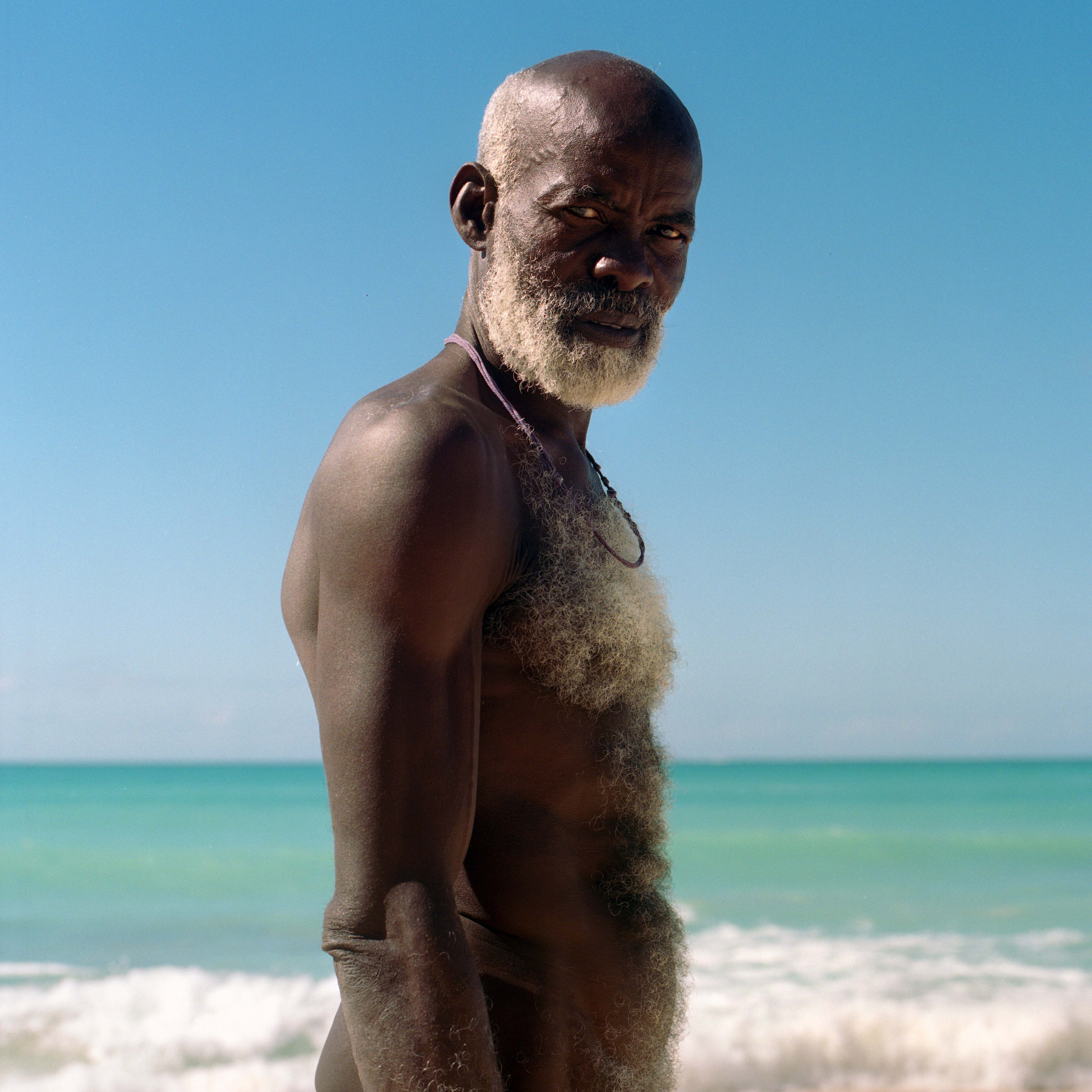
Take Big Fence, for example. A project where I spent three months on the island of Pitcairn in the Pacific Ocean. I spent three months on Pitcairn Island in the Pacific Ocean, a place often imagined as a romantic, remote paradise, home to just 42 people. Yet in 2004, a series of sexual child abuse allegations emerged, leading to the convictions of 8 island men. Since publishing the work, people have come up to me to share their own experiences of abuse. They tell me the book gave them a framework to understand their stories within a broader context, and that it helped them in some way. That was never my explicit intention, but it’s incredibly meaningful when people find such personal resonance in your work.
Ultimately, my aim is to create dialogue, not division. I try to tell layered stories that go beyond a single perspective. Doing that requires time and care. It’s a slow, deliberate process, and that’s precisely what draws me to it.’