Exploring Brussels with Ximena Echague
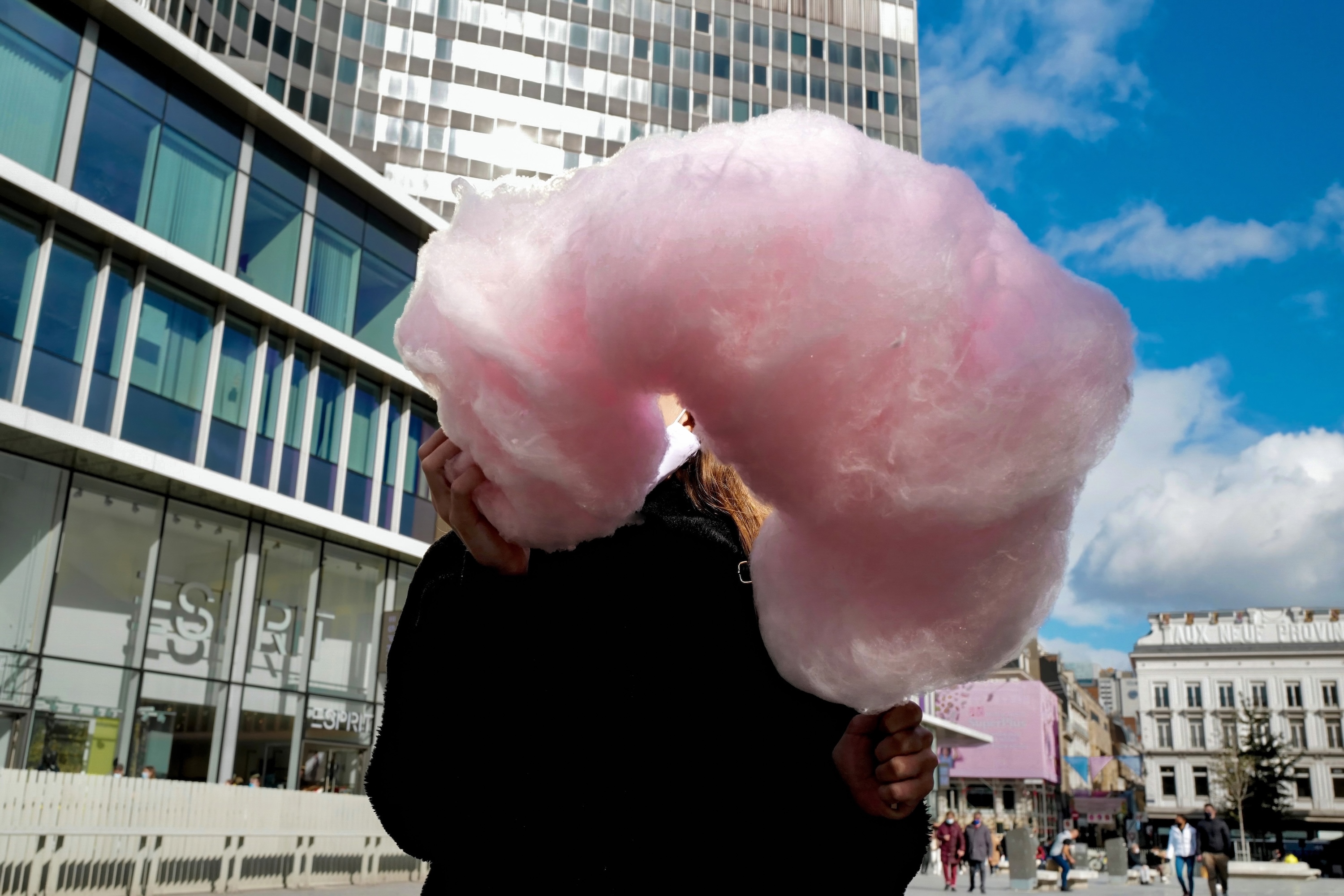
Exploring Brussels with Ximena Echague
Street photography begins in the streets, so what better time to explore Brussels than during our festival? Join renowned street photographer Ximena Echague, who has made Brussels her new home, for a guided tour through the city. Along the way, we’ll uncover hidden gems that reveal the charm of everyday Brussels and invite you to see the city with fresh eyes. So grab your camera, let your gaze wander, and discover what the European capital and host city of the BSPF has to offer.
Check out the photo walk by following the route below
We’re meeting in a café. The winter sun is shining, and it’s warm enough to have a coffee outside. I’ve only just got two sentences into my book when Ximena arrives. Her smile immediately puts me at ease. She asks me what I’d like for the article. The idea is simple: to observe her work and let her take me along for a day in the life of a street photographer. She smiles and agrees. “Let’s have some fun,” she said. And that’s exactly what we did.
We hadn’t even turned the first corner when Ximena took her first photo: a couple sitting at a table by the café window. That surprised me. I saw the couple before she arrived. I’d noticed they were drinking tea, but Ximena saw an opportunity. As we walked past, she scanned her surroundings, saw the frame and the story. She pressed the shutter and walked on as if she hadn’t just frozen the moment in time.
“Taking photos is a bit like acting,” she says. “People on the street hardly notice me, and if they do, they probably just think I’m some weird woman wandering around a bit strangely.” As we walk through the streets together, I try to take photos too. Her small, compact camera contrasts with mine, fitted with a large lens that allows me to keep a safe distance from the people I photograph. While I feel like I'm being watched, she moves through the street almost unnoticeably.
Walking through the Matonge district, we pause in front of the escalators that take people to the Porte de Namur subway station on the outskirts of Ixelles. It’s a glass cube where the light reflects off the windows, making handprints visible. The flow of people going up and down the escalator creates an interesting dynamic of arrivals and departures. We stay here for a while. She takes photos and shows them to me. “Look,” she says, tapping me on the shoulder, “it’s three stories in one. The wetness on the streets reveals that it has rained. The two people are going up and down the escalator; their eyes will meet once they reach the same level. And the shadow shows a woman leaning against crowd barriers.”
Crowd barriers almost seem to be part of Brussels' identity. Although they serve as a temporary barrier, it seems as though the city wants them to become a permanent fixture in the streetscape. While Ximena focuses on finding the perfect position, chasing the image she has in her head, I wander around a bit. As soon as I look up, I come face to face with my own reflection. The ceiling of the glass cube reflects everything happening on the ground. Here too, the surroundings invite you to play with reflection and the search for multiple stories within the same image.
We walk from Matonge towards Mont des Arts, where we are greeted by a wonderful view of the city. On the steps, a musician plays the guitar while children laugh and dance among the people passing by. As we get closer to Central Station, the streets become busier. Travellers, commuters and international tourists stroll past one another, some at ease, others in a hurry. It feels like a crossroads of cultures and journeys, where everyday life unfolds in a constant flow of movement.


Click and go
We walk side by side and I watch how Ximena takes photographs. How close she gets varies each time, depending on what she wants to capture. Sometimes she walks right past the people she photographs, closer than most people would dare, while looking straight ahead at the street. “I never look through the viewfinder. I always create the image in my head first, and then I just hope it turns out that way.” I stand and watch her walk past a group of teenagers, almost touching their noses. She captures the moment and disappears again into the flow of the street.
“You have to adjust your exposure for every street,” she says, “and that means you become aware of it every time you turn a corner.” As we leave Central Station behind us, we pass the Royal Saint-Hubert Galleries. Built in 1847, they are among the oldest covered shopping arcades in Europe. They soon became a meeting place for Brussels’ cultural and intellectual life. Writers, artists and members of the bourgeois elite gathered beneath the glass roof, transforming the galleries into a sophisticated urban salon. As a result, the galleries are still a place where the present and the past come together.
After walking alongside her for a while, I started to recognize her various tactics. Sometimes she moves openly through the street and jumps about, truly like ‘a crazy woman’. What strikes me is that people often follow her lead: they laugh along and even seem proud when they realize they’ve been photographed. “I want to remain invisible, but once you’ve been noticed, it’s all about how you interact with your characters. If you act sneakily, and people notice, they look at you as if they could kill you. It’s important to have a good understanding of how people might react. And if they don’t like it, you take responsibility: you talk to them and explain what you’re trying to do.”
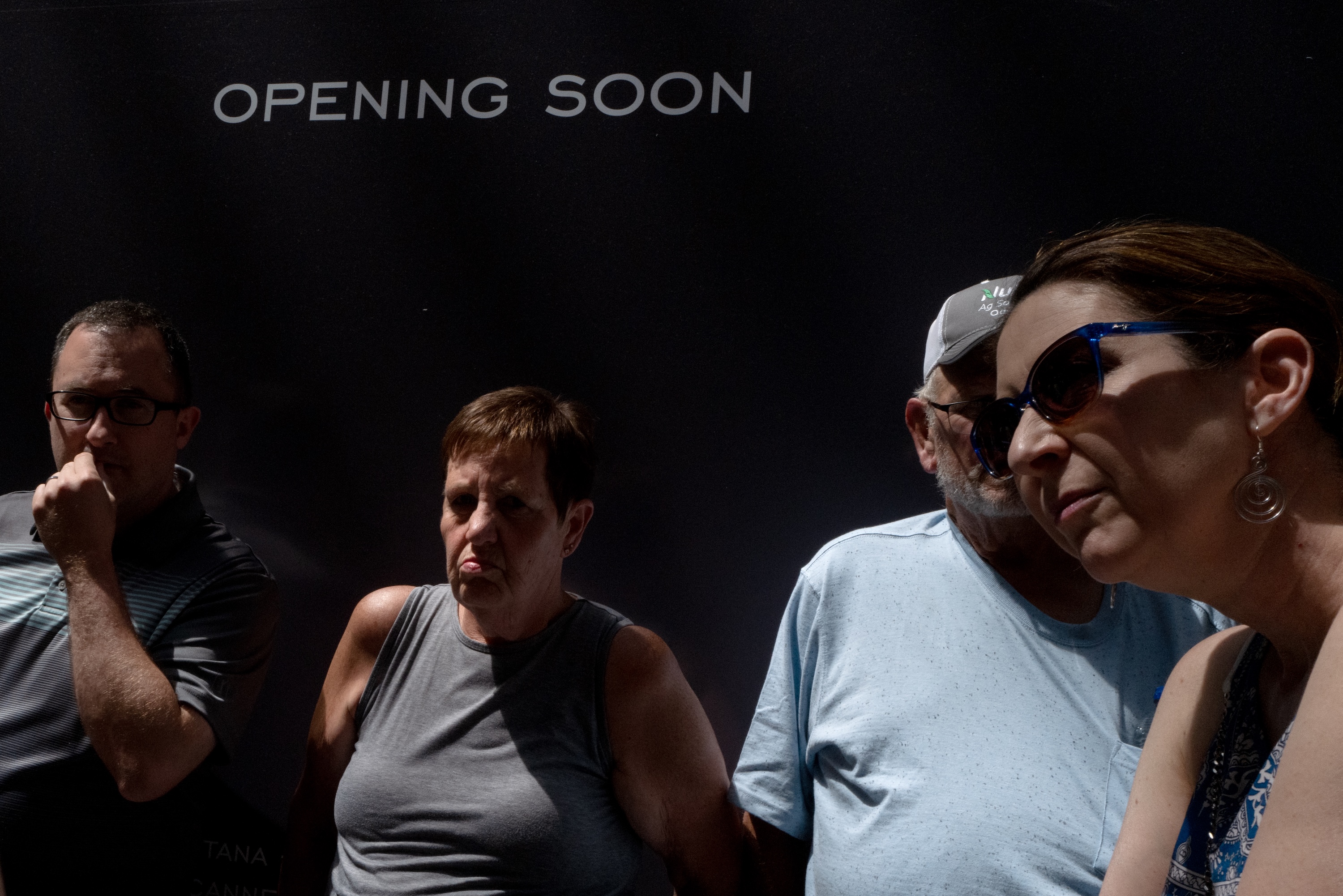
She refers to the people she photographs as ‘characters’. As we walk, she points them out to me: “That’s an interesting character; look at the way he’s dressed… You find such characters all over Brussels, including on the Grand Place.” The historic heart of Brussels is surrounded by elegant guild houses and the Gothic town hall. It was, and still is, the center of social and commercial life, and it is said that various great philosophers once wrote out their ideas in the cafés around it. “Although these days it’s mainly tourists with their selfie sticks,” Ximena laughs. “But sometimes, with a bit of luck, there’s an event in the square, which makes it an excellent spot for street photography. Whenever something happens, the square fills with very specific characters, each with their own story within the frame.”

Brussels boring? Never!
Photography is a wonderful way to get to know and understand a city. Although I have visited Brussels many times to see friends and family, this was the first time I really slowed down and strolled through the streets. “When I moved here in 2010,” says Ximena, “I knew nothing about this place, so I had to start from scratch.” Going out with a camera gave her a reason to walk and get to know the city that is now her home. “Brussels quickly became my second home. It’s small, almost as if it consists of several small villages, each with its own character, yet together forming one city. When people ask me if Brussels isn’t boring, I’d love to shout back that they have absolutely no idea! Everything that happens in Europe passes through Brussels.” Ximena sees the city as a kind of hub, a center that reflects who we are together.
Walking towards rue Neuve, the main and busiest shopping street, we find ourselves in a constant stream of people carrying shopping bags as they go in and out of the shops. Ximena points to a woman standing in the middle of the street, asking people for money. “She’s been standing here for as long as I can remember, probably even before I arrived here. I’ve photographed her several times and have thus captured her changes with my camera. Photography helps me understand where I’m walking and what’s happening around me. In doing so, street photography contributes to the city’s collective memory. It preserves what would otherwise disappear or change unnoticed. It captures streets that are being rebuilt, and the memory of how they once were. That’s how you contribute a little to the story of Brussels.”
Hunter or fisherman?
“As a street photographer, you know the difference between a hunter and a fisherman,” explains Ximena. However, as a newbie in the field, I don’t know what she’s talking about. “A hunter is someone who walks around looking for good shots,” she explains, “literally hunting for a photograph. They have to be bold to get the shot they want. A fisherman, on the other hand, stays in one place and waits for the right moment within the same frame. They remain patient. Once you’ve found a spot, the art is to wait until the situation arises.”
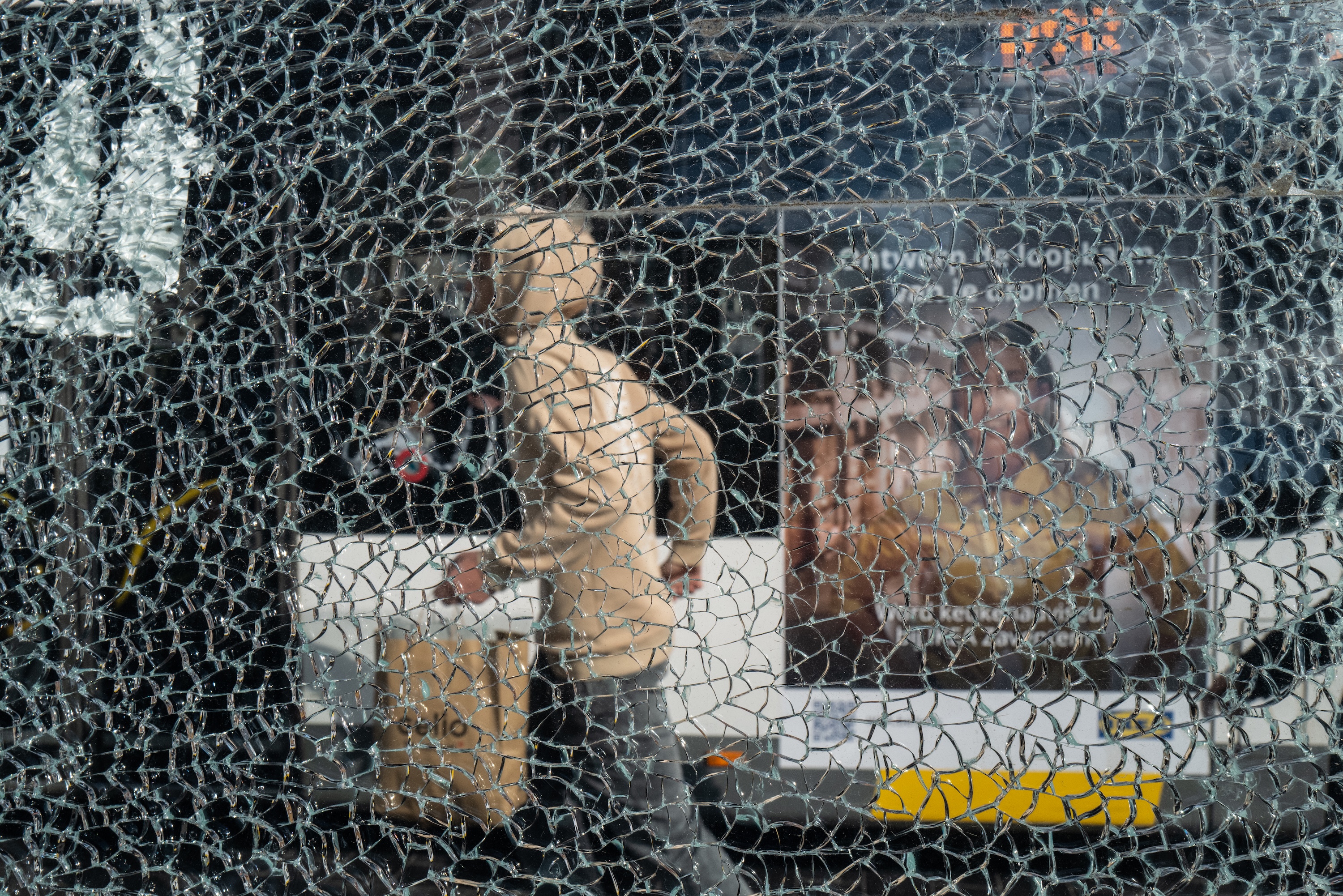
Rogier bus station is the perfect place to ‘fish’, according to Ximena’s definition. This is where various bus and tram routes come together, connecting the historic center with the city’s northern districts. It's a place where people come and go. Some rush across the square trying to catch their bus, while others stand still under the glass roof, looking at their phones. Some are saying goodbye, others are reuniting. The glass walls at the bus station are no longer perfectly in place; some panels have come loose and are cracked. The surrounding buildings and the open space create a strong sense of depth. The buses passing by with their long rows of windows add an extra layer. It becomes an interesting place to play with composition and layering. “I always come back here,” Ximena says. When I ask if it doesn’t get boring photographing in the same place all the time, she replies immediately: “There’s no such thing as a boring place. And if there is, it’s the people and the events that ultimately make it interesting.”

Be aware
It’s not always easy to take photos and go unnoticed in every neighborhood. “From here on, you need to be a bit more careful,” Ximena assures me as we walk through the streets around the North Station. “People don’t like being photographed, but it’s a very interesting place,” she continues. Migration is a central theme in Ximena’s photography, which means she is more likely to seek out ethnically mixed neighbourhoods in Brussels, such as here in Schaerbeek. “It’s the coexistence of old and young, rich and poor, that appeals to me.” We walk down Rue de Brabant, where an overflow of shops, cafés, markets and restaurants creates a lively atmosphere. Around us, French, Arabic and Dutch blend. We walk along the pavement, which is too narrow for the number of people passing by.
“If people don’t want to be photographed, then you don’t do it,” replies Ximena when I ask her what she does if someone reacts negatively. “It’s important to try to assess the situation as best you can, and you have to take responsibility if things go wrong.” This question reminded her of a moment a few years ago: “I was once out taking photos with a friend and we wanted to do a piece on window sex work. While we were taking photos, we were spotted by someone who didn’t approve, and it immediately felt wrong. We ran away, but he came after us. In the end, nothing happened, but I deleted the images straight away. It’s never my intention to hurt people with what I photograph, certainly not those who are already struggling.”
As we finish our walk, one thing has become very clear to me: street photography is a passion. “It’s hard to really make a living from it,” says Ximena. “And that’s not why I do it either. If I didn’t feel that passion, I wouldn’t go out onto the streets day after day. I’m constantly taking photos and every day I come home with a thousand of them. But whether I’ll capture ‘the’ shot remains an uncertainty, which makes it exciting”
Some of the photos in this article were taken during the walk described above.
Now it’s up to you. Get out there, feast your eyes, and give it a go.
Text: Leena Van den Bergh
Photographs: Ximena Echague