10 years of BSPF: where it all began
10 years of BSPF: where it all began
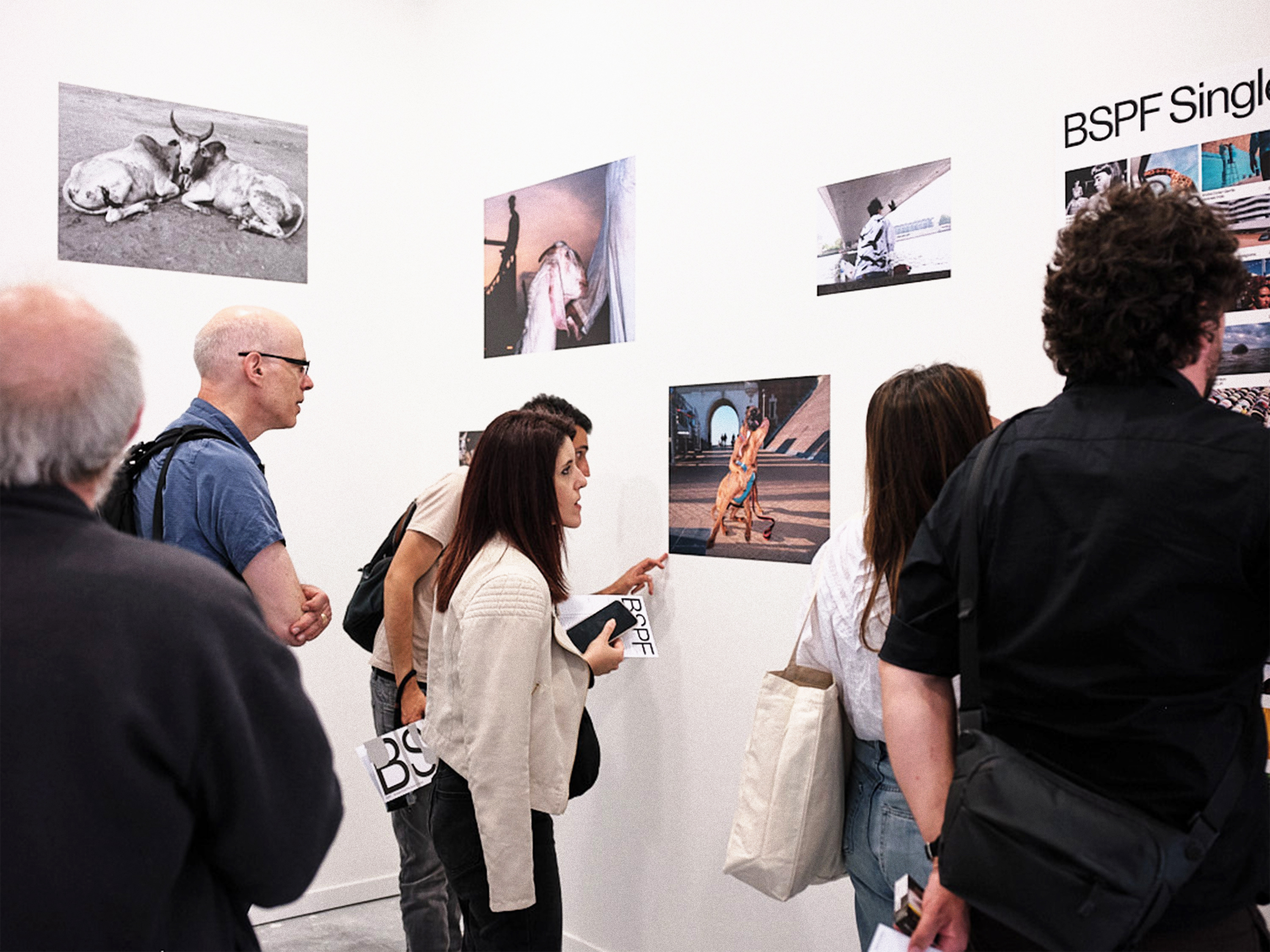
In October 2016, the Brussels Street Photography Festival (BSPF) opened its doors for the very first time, becoming the first Belgian festival to put street photography and its creators firmly in the spotlight. Ten years later, we look back with co-founder Dani Osorio and current organizer Sigrid Debusschere. A conversation about how it all began, where the festival stands today, and the vital role festivals play within the street photography community.
From Tumblr to BSPF
Dani’s interest in bringing photographers together began well before the festival itself. In 2013, he was active on Tumblr, a platform that allowed photographers to connect and inspire one another. He shared his own work, reposted images by photographers he admired, and conducted interviews. In doing so, he gradually built a following.
Over time, this small online network grew into something much larger. These were the first steps toward the community BSPF is today: a group of photographers who want to connect and inspire each other.
As his network expanded, so did the need for a physical space to meet. Dani explains that, while other photographic disciplines were widely recognized and celebrated, street photography followed a different path. "Street photography has always been the underdog. It’s often been overlooked and underappreciated," he says. "With the festival, I wanted to elevate the art and bring it to a wider audience." The festival thus became a place where the work could be seen, and where photographers and audiences could come together.
Working on the first edition
Starting a festival was not an overnight decision. At the time, the Miami Street Photography Festival was the leading event in the field. Dani traveled there to understand what it takes to organize such an event.
"Once I arrived, I was amazed by how everything was set up. I knew one of the organizers and shared my idea of starting a festival myself. 'Great!' was her first response. Followed quickly by: 'It’s a lot of work.'"
Dani eventually returned home inspired and armed with practical advice. "The best advice I received was not to do it alone." That’s when Diego Luna Quintanilla and Sedaile Mejias joined the project. They are both good friends of Dani and were excited to join forces.
Once their association, Cakri, was officially established, the next challenge was building the festival from the ground up. From the start, the concept was clear: the festival would revolve around exhibitions featuring both invited artists and competition winners. Street photography draws from everyday life in public spaces, capturing moments that belong to everyone. The festival completes that cycle by bringing those images back to a wider audience, offering fresh perspectives on familiar scenes.
For Dani, the festival became a way of saying: "Look, this is what we captured, now it’s yours to enjoy."
What truly defined the festival’s identity, however, was the way the images were presented. "I wanted large prints—two meters wide—displayed outdoors, in the streets," Dani explains. "So that when you arrive, it feels like 'kabam!', photos everywhere, almost falling on top of you." And so it was done.
"I remember thinking it would be great if the festival felt ambitious from the very beginning. So we decided to contact Magnum Photos straight away. It felt like a long shot, but worth trying." The response was unexpectedly enthusiastic. During the first edition, Belgian Magnum photographers Bieke Depoorter and Harry Gruyaert attended and gave talks.
At the same time, Dani’s Tumblr network helped attract an international audience. Step by step, the festival took shape. "It was a rush, but it worked out," he recalls with a big sigh, followed by a smile.
For many street photographers, the festival became one of the few opportunities to meet in person, beyond online interaction. Looking back makes Sigrid Debusschere smile as well. She started as a volunteer and now organizes the festival herself. "I remember the first edition being a real surprise. Photographers I only knew from the internet—whose work I had endlessly scrolled through—were suddenly there in person."
The festival continued to grow over the years. Celebrating its tenth anniversary, BSPF counts eight editions. When the COVID-19 pandemic forced cultural events to pause, Cakri passed the festival on to BREEDBEELD, a non-profit organization supporting image makers. Recognizing BSPF’s accessibility and value, the organization chose to continue the story. Working for BREEDBEELD, Lies De Jaegher led the festival’s revival. Today, Sigrid is in her third year as organizer. "I’ve always been a fan of the festival," she says. "When the opportunity came up, it felt like a natural step, something I was excited to dive into." What began as an ambitious idea has grown into a festival that continues to bring photographers together, edition after edition.


Exhibiting in the streets
As mentioned, presentation plays a crucial role in the festival’s identity, helping the photographers gain exposure. "We always tried to invest as much of the budget as possible in the exhibition," Dani explains. "It’s our way of giving something back to those who submit their work."
This results in large-scale prints and carefully curated displays designed to make photographers feel valued. As Sigrid puts it: "You don’t travel across the world to see your image printed no bigger than a postcard. It deserves to be seen properly."
From the beginning, the festival extended beyond traditional exhibition spaces. Inspired by the street itself, its installations have been anything but conventional: photos attached to scaffolding with zip ties, or suspended from ceilings with red rope.
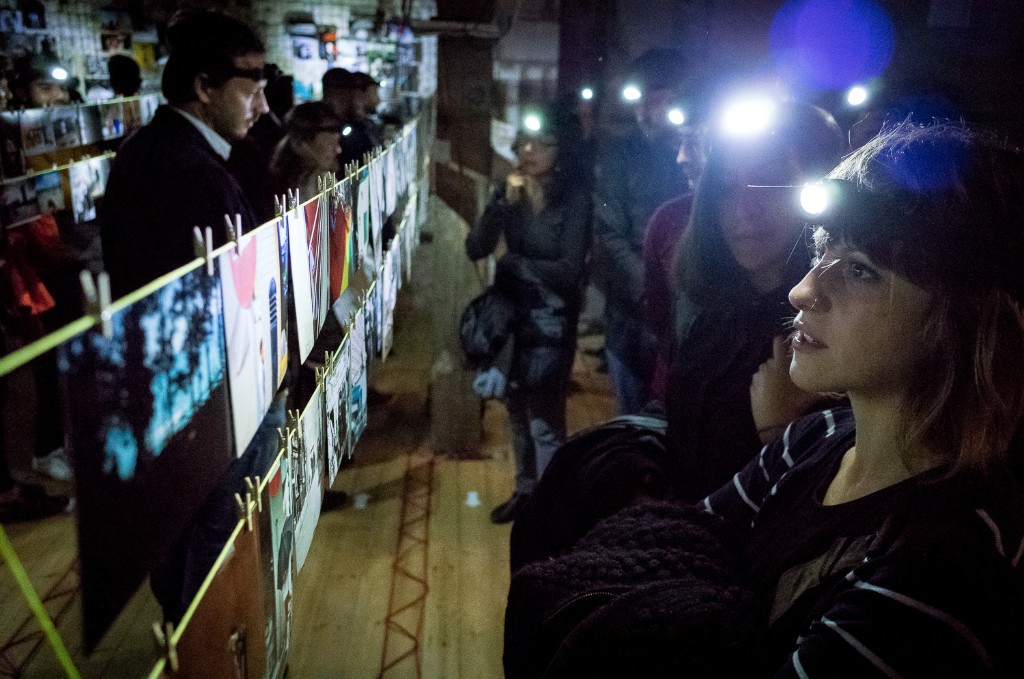
"One year," Sigrid recalls, "Cakri created a preview exhibition entirely in the dark. Visitors were given headlights and tasked with searching for the images. In a way, they became street photographers themselves, hunting for moments."
For its tenth anniversary, this approach expands into a combination of indoor and outdoor exhibitions. A selection of highlights from past editions is displayed outside Halles Saint-Géry and throughout the surrounding streets. "This allows the work to reach a broader audience," Sigrid explains, "including people who might not otherwise visit the exhibition, and therefore creates a direct dialogue with the city."
The main venue this year is the Bourse, located in the historic city center. "Hosting the festival here feels like the perfect way to celebrate its tenth anniversary," Sigrid says. "Presenting the selection here elevates everything: the work, the setting, and the experience."

Building a community
Because a community grows stronger through real-life encounters, the festival actively encourages photographers to attend in person. In an age dominated by digital circulation, physical prints and experiencing photography together remain of great value.
"Each year, I try to create an ecosystem where photography can exist, be shared, and spark new connections," Sigrid explains. Through talks and portfolio reviews, photographers are invited to reflect on their work and learn from one another. "The award ceremony is also a key moment," she adds. "It’s where people come together to celebrate, ask questions, and exchange ideas." These interactions strengthen the sense of community and help photographers refine their perspectives.
This exchange mirrors the nature of street photography itself. Looking at recent winners, there is a striking diversity: some are recognized for a single, decisive moment, while others are rewarded after years of persistence. Together, they reflect what street photography is about: a continuous process shaped by chance, dedication, and reinvention.
Brussels as a melting pot for creativity
Dani launched the festival in Brussels simply because he was living there at the time. What began as a practical decision quickly became a meaningful one. "Brussels offers endless opportunities for photography, and people keep coming back," he says. "Maybe it’s because the city isn’t too polished. There’s a certain messiness to it. That’s what gives it character."
Over time, Brussels has become a reference point for street photography. "You can’t miss it," Sigrid adds. "The city breathes diversity; it is a mix of cultures, languages, and places. There is always something happening." She even dedicated her book 'The Colors of Brussels' to capturing that energy.
For an international audience, the festival also serves as a gateway to the city. By choosing different locations each year and organizing photo walks, BSPF invites visitors to discover (or rediscover) Brussels. It offers access to neighborhoods and perspectives they might otherwise miss, inviting visitors to explore. Isn’t that what street photography is all about?
Text: Leena Van den Bergh